


Roman Town [75 - 400]
Back to Time Periods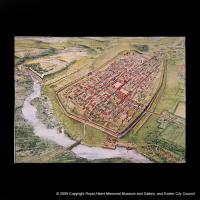
_Exeter.jpg&w=200)
.jpg&w=200)
-
The Town
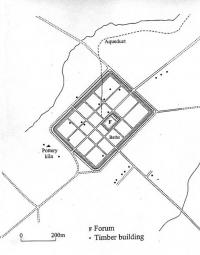
Following the departure of the legion, Exeter was chosen as the regional capital (‘civitas capital’) of the people of Devon and Cornwall - the Dumnonii. It was known as Isca Dumnoniorum. A new stone forum was laid out at the centre of the old fortress site, and local people who accepted Roman authority and customs soon set up shops and houses on the plots surrounding it.
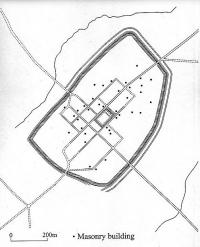
A century later, the city had grown beyond the limits of the old fortress, and when Exeter, like other regional capitals in Britain, began building town defences around AD 180-200, they enclosed a considerably larger area of 93 acres. In the third and fourth centuries the town seems to have been at least modestly prosperous. Four buildings are known to have had costly mosaic floors. Our impression is however that it was not as prosperous as the neighbouring towns of Ilchester and Dorchester, still less the larger towns.
By the late 4th century Exeter was in terminal decline. The suburbs had already been abandoned by about AD 360; by the 380s the money supply ceased and the population had contracted to the centre of town. At this time farming was being practised in much of the walled area. Soon - probably not long after AD 400 - urban life had ceased.
Settlements outside the walled town
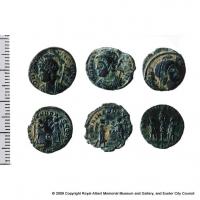
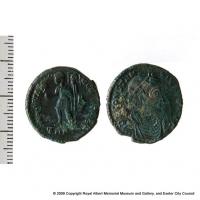
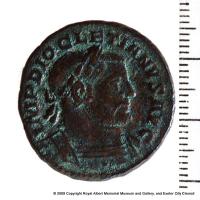
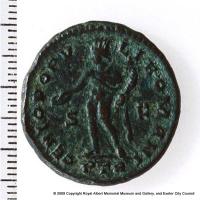
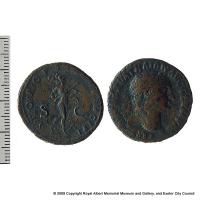
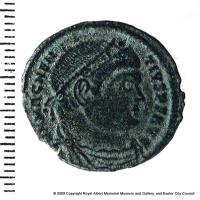
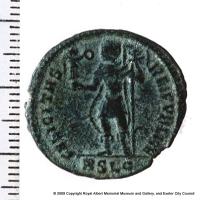
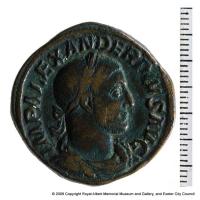
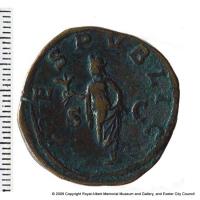
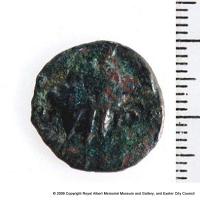
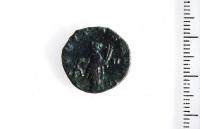
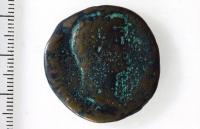
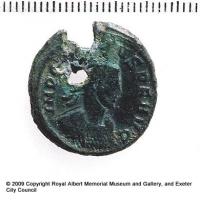
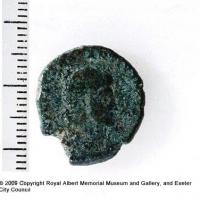
Excavation in Exeter has always been concentrated within the walled area. There must, however, have been many scattered settlements in the surrounding countryside. Roman coins, collected casually by members of the public and donated to our museum over the last 150 years, offer the most extensive evidence of this rural activity. The find-spots of many of these coins were poorly recorded, so are not plotted here. Those shown below are among the examples for which we have detailed records.
-
After the army left Exeter, the site of their fortress became a town known as Isca Dumnoniorum. The town began to grow outside of the old fortress, so by AD 180-200 a new wall was built enclosing 93 acres. In the third and fourth centuries some grand houses laid mosaic floors, but by about AD 360 a decline had set in. Much of the urban life of the last 300 years seemed to end and the people turned to farming.
-
Following the departure of the legion, Exeter was chosen as the regional capital (‘civitas capital') of the people of Devon and Cornwall - the Dumnonii. It was known as Isca Dumnoniorum. A new stone forum was laid out at the centre of the old fortress site, and local people who accepted Roman authority and customs soon set up shops and houses on the plots surrounding it.
-
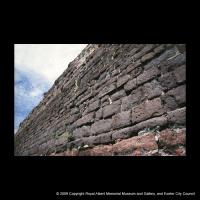
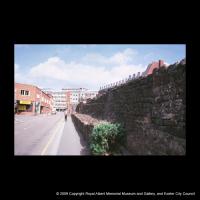
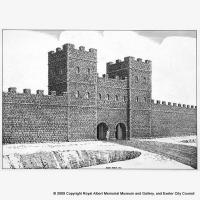
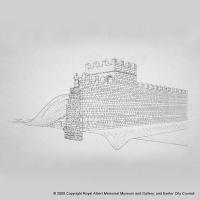
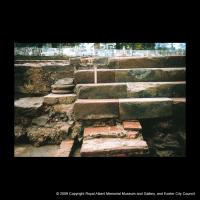
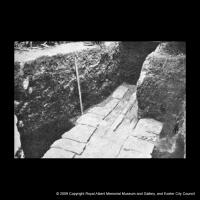
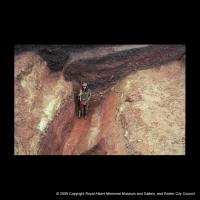
The city's defences distinguished Exeter from its less important neighbours - a symbol of authority, wealth and prestige, as well as security. The city wall, which still survives in large part today, was only one element of a system of defence which also included a rampart behind the wall, a large protective ditch in front of it, and gates.
-
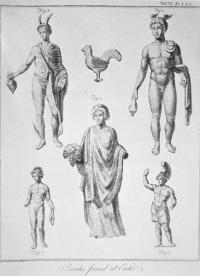
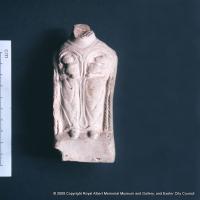
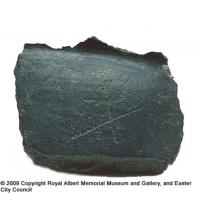
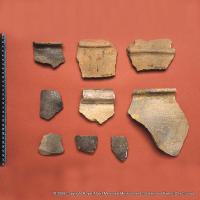
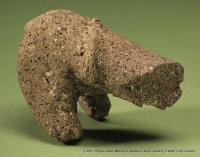
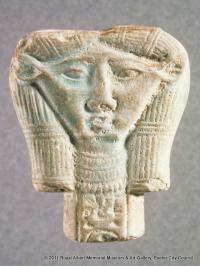
For most of the Roman period the people in Exeter worshipped a range of gods and goddesses. Several small statuettes representing these gods have been found from the Roman town. There is only very slight evidence of Christianity in the later Roman town. A single sherd of pottery has an early Christian symbol, a ‘Chi-Rho' monogram, scratched into the surface. It is the only evidence for Christianity in Roman Devon.
-
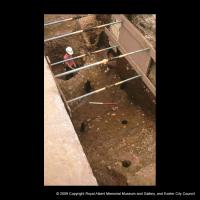
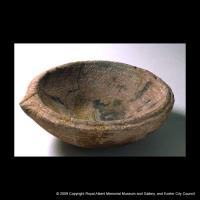
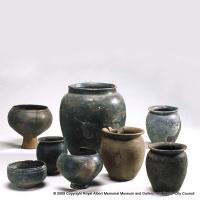
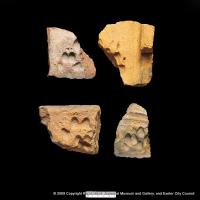
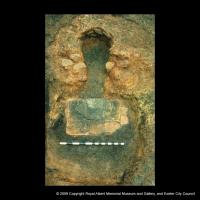
The citizens of the Roman town continued to use many of the skills introduced by the army. Both everyday and luxurious items including pottery, building tiles and gold and silver-working were made in the town. The townspeople also made food in the Roman style, with excavations revealing an oven used to bake Roman bread.
-
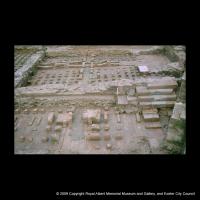
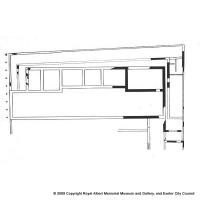
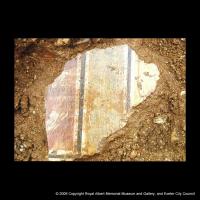
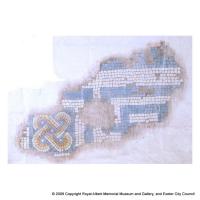
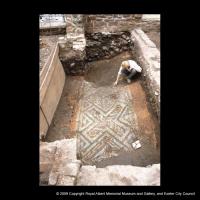
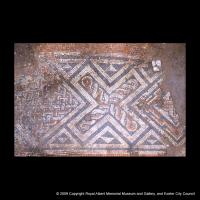
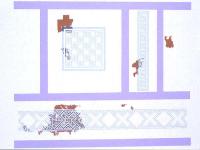
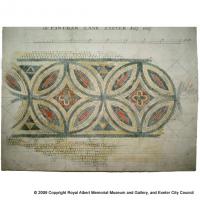
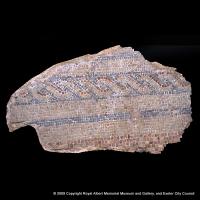
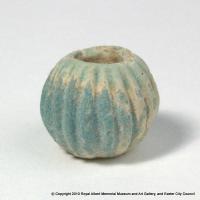
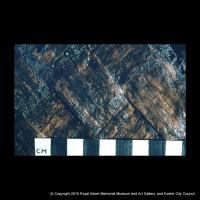
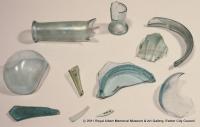
The Roman town contained a variety of houses some built from stone, others built from timber. Several large town houses in the late Roman town contained fine mosaic floors. The largest fragment yet discovered comes from a house in Catherine Street. It contains about 13,000 cubes in just three colours - red, white and grey - and dates to the early 4th century AD. The people living in Exeter had access to a wide range of household goods, both of things made locally but also imported from across the Empire.
-
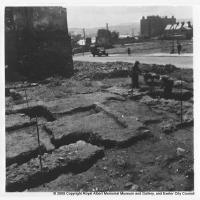
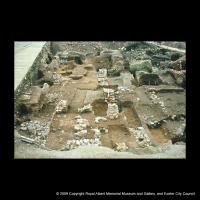
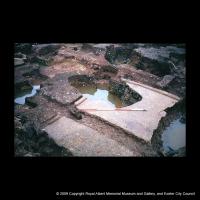
The new ideas of hygiene and health continued in the Roman town. A public bath-house was built in the centre of the town, and several wells for sourcing clean water have been discovered during excavations in the modern city.
-
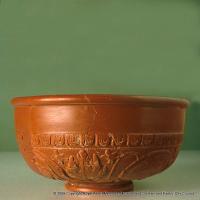
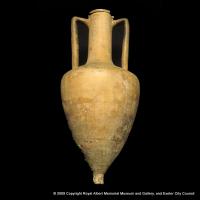
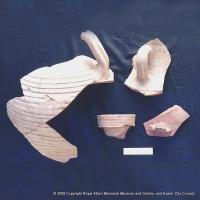
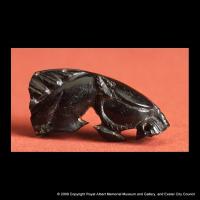
With the departure of the legion from Exeter the range of imported goods declines sharply but there are examples of Mediterranean, Rhenish and the ubiquitous samian pottery brought from Gaul. Items were also sourced from other parts of Britain, including pottery from South Devon and Dorset, and jet from Whitby. The presence of western French pottery in the late Roman period is unusual in Roman Britain.
-
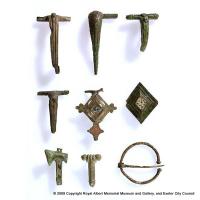
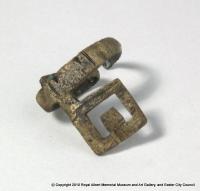
Archaeological finds in the form of brooches and rings are some of the evidence of clothing and fashion in the Roman town. Statuettes of religious figurines may suggest the types of clothing worn by people in the Roman town.
-
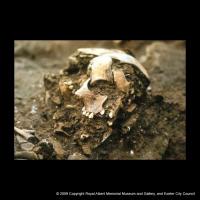
Evidence for children in the Roman town is rare, as most of their belongings and toys were perishable or fragile. The more tragic side of children's lives in early societies, the high level of infant mortality, is evident with burials from the town.