


Saxon Town [900 - 1068]
Back to Time Periods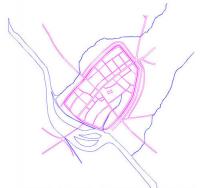
-
After centuries when Exeter was virtually abandoned (excepting its monastery), town life was re-established at Exeter in late Saxon times. It is probably King Alfred the Great (AD 871-899) who should be credited with its re-foundation.
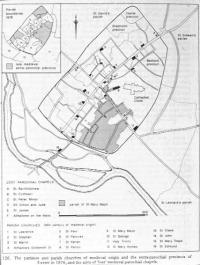
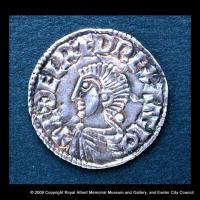
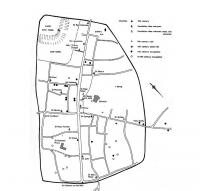
A new street grid, different from the Roman one, was laid out within the walls, and the defences were refurbished. The city evidently grew rapidly. By the year 1000 it was about the sixth most prosperous city in Britain, after London, York, Lincoln, Winchester and probably Chester. By the 11th century there were as many as 30 parish churches, with many timber buildings fronting the main streets where crafts such as the working of metals, leather, cloth and wood were practised. Trade in the mineral wealth of South-West England, especially tin, appears to have been the source of much of its prosperity.
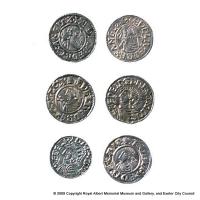
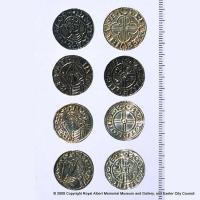
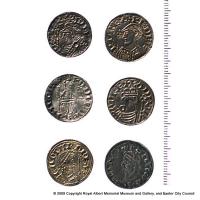
The four Devon burhs (defended towns) were:Exeter, Barnstaple, Lydford, Totnes
These had the following features:
- Defences – in the case of Exeter the old Roman wall and bank
- A planned street system with a main street and minor streets at right-angles
- A market (often held in the open High Street)
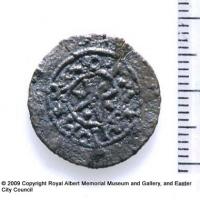
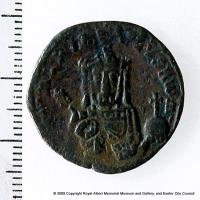
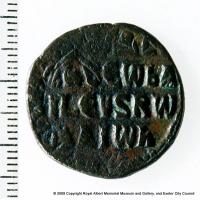
- A mint
- Crafts
- An urban population – perhaps 2000 people in Exeter by 1066
-
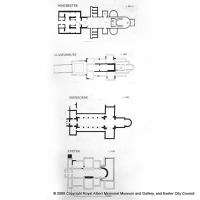
The revival of town life in the Saxon period was marked by settlement largely within the walled area. It is probably King Alfred the Great (AD 871-899) who should be credited with Exeter's re-foundation. A new street grid was laid out within the walls and the defences were refurbished. The city grew rapidly, so by the year 1000 it was about the sixth richest in Britain. The minster became a cathedral in 1050, when Bishop Leofric moved his seat here from Crediton. Soon afterwards a new Norman cathedral was built and the Saxon minster became the parish church of St Mary Major.
-
There is no evidence yet of public buildings within the Saxon town.
-
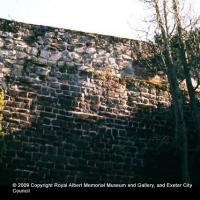
Even after 500 years of decay, the Roman walls must have been a formidable barrier. In Alfred's reign only about half of the circuit seems to have been manned, but later in the Saxon period the entire circuit was defended against invading Viking armies (as in 997 and 1003) and later against the Norman army of William I. The discovery of late Saxon stonework in the city wall near the castle shows the walls were being maintained once more at this date.
-
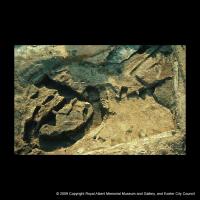
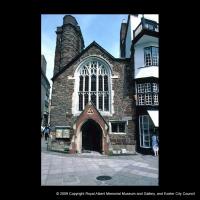
The minster grew in size in the 10th and 11th centuries, rising to Cathedral status in 1050. During late Saxon times many small chapels came into existence in the town, which became the parish churches of the medieval city.
-
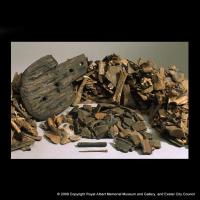
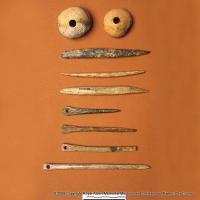
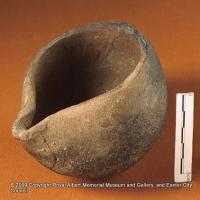
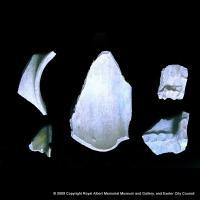
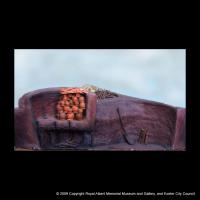
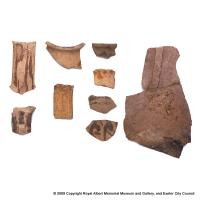
The archaeological finds from the Saxon town show a wide range of activities going on side-by-side in the centre of the city. These include the working of textiles and leather, metalworking, butchering and hornworking. Away from the city centre, an Anglo-Saxon pottery kiln produced ceramics of very high quality.
-
After Exeter was re-established as a town it became crowded with houses and shops. Rubbish pits excavated by archaeologists have revealed large quantities of animal bone, local pottery and imported pottery from Normandy. These show what everyday life was like for the residents of Exeter.
-
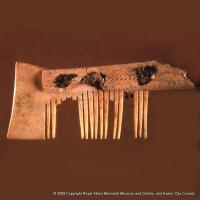
Excavations have revealed that people in the Saxon town lived in conditions which would today be regarded as insanitary, with water supplies contaminated by pits of rubbish and human waste. Despite these conditions objects such as bone combs found in the city suggest that people tried to look after their appearance and health.
-
Foreign trade was a significant part of the life of the late Saxon town. Archaeological deposits from this time often contain pottery sherds imported from Normandy, with other pottery from the coastline between the Loire and the mouth of the Rhine. The strength of trade with France differs from the picture in South-east England, where imports from the Low Countries are much more common.
-
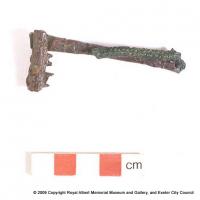
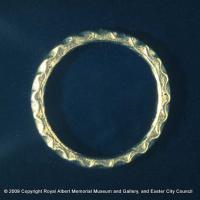
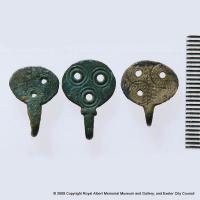
Very little evidence survives of dress and display in Saxon Exeter. A few items made from metal have been discovered which provide a glimpse what was considered fashionable.
-
Sorry there are no objects in this theme at present.